

Controversial: paper trading can fool you into thinking you’re ready.
It teaches order entry, timing, and strategy without risking cash, so new traders get useful muscle memory.
But demo fills are cleaner and emotions are missing, so performance often drops when real money goes on the line.
Thesis: use simulation as a training lab, not a report card. Match virtual capital to your live size, add realistic slippage and fees, treat stops as real, and keep a strict journal.
Do that and your demo practice will actually transfer.
Understanding Simulated Paper Trading and How It Works
Paper trading started simple. Traders scribbled buys and sells on actual paper to track what would’ve happened without putting money on the line. Now it’s all digital. Simulators replicate order entry, live pricing, and P&L tracking using virtual cash. Modern demo accounts let you place trades, watch fills come through, and review results exactly like a live setup. Except nothing settles and your capital stays safe.
Most platforms give you somewhere between $10,000 and $100,000 to start. Some go as high as a million. The simulators pull live data or slightly delayed feeds, so prices look real. Your demo tracks win rate, average gain, average loss, running P&L. Orders get logged. Positions update as the market moves. You can practice every order type without worrying about blowing up your account.
Here’s the catch. Demo trades never leave the platform. They don’t route to a real exchange, so fills look cleaner than they’d be in live markets. Spreads seem narrower. Slippage basically disappears. Partial fills are rare. That polished environment is great for learning the buttons, but you’re practicing in a version of the market that’s smoother than what you’ll face when real money’s involved.
Key Benefits of Paper Trading for New and Intermediate Traders

Paper trading gives you a no-risk lab to build skills and test ideas. You get the rhythm of market hours, the feel of order entry, the discipline of position management. All before you risk a dollar. New traders start here. Experienced ones keep demo accounts running even after going live.
The real educational wins:
Platform familiarization. Learn where everything is, how order types behave, what happens when you fat-finger a quantity. Better to find out in simulation.
Strategy testing. Run a setup through 30 trades and see if the edge holds up when conditions change.
Confidence building. Execute your plan over and over until the steps become automatic.
Routine formation. Practice your pre-market checklist, intraday risk checks, end-of-day review. Build the habits before they matter.
Performance measurement. Track win rate, average gain, average loss, rule adherence. Figure out if you’re actually following the plan or winging it.
Comparing Paper Trading vs Live Trading Conditions

The biggest gap between paper and live is execution and emotion. Demo platforms usually deliver instant fills at or near your limit price. Market orders go through without slippage. In live markets, stops can fill several ticks worse during fast moves. Spreads widen when liquidity dries up. Partial fills happen when your size exceeds what’s available at your price. Small frictions on each trade, but they compound.
Demo environments don’t model routing failures, latency hiccups, or the microstructure quirks that occasionally mess with live orders. Your simulated trade might look flawless, but real orders travel through broker infrastructure, matching engines, and exchange systems. Any of those can introduce delays or change your fill. Rare, but it happens. Demo never shows you that.
Then there’s psychology. Watching $500 disappear in a demo account doesn’t hit the same as losing $500 you actually worked for. That emotional pressure is what makes traders exit early, widen stops, or freeze when they should act. Paper trading can’t replicate that. Performance usually drops when traders move from demo to funded accounts. The strategy’s fine. The discipline changes under real pressure.
Getting Started: Step-by-Step Paper Trading Setup Guide
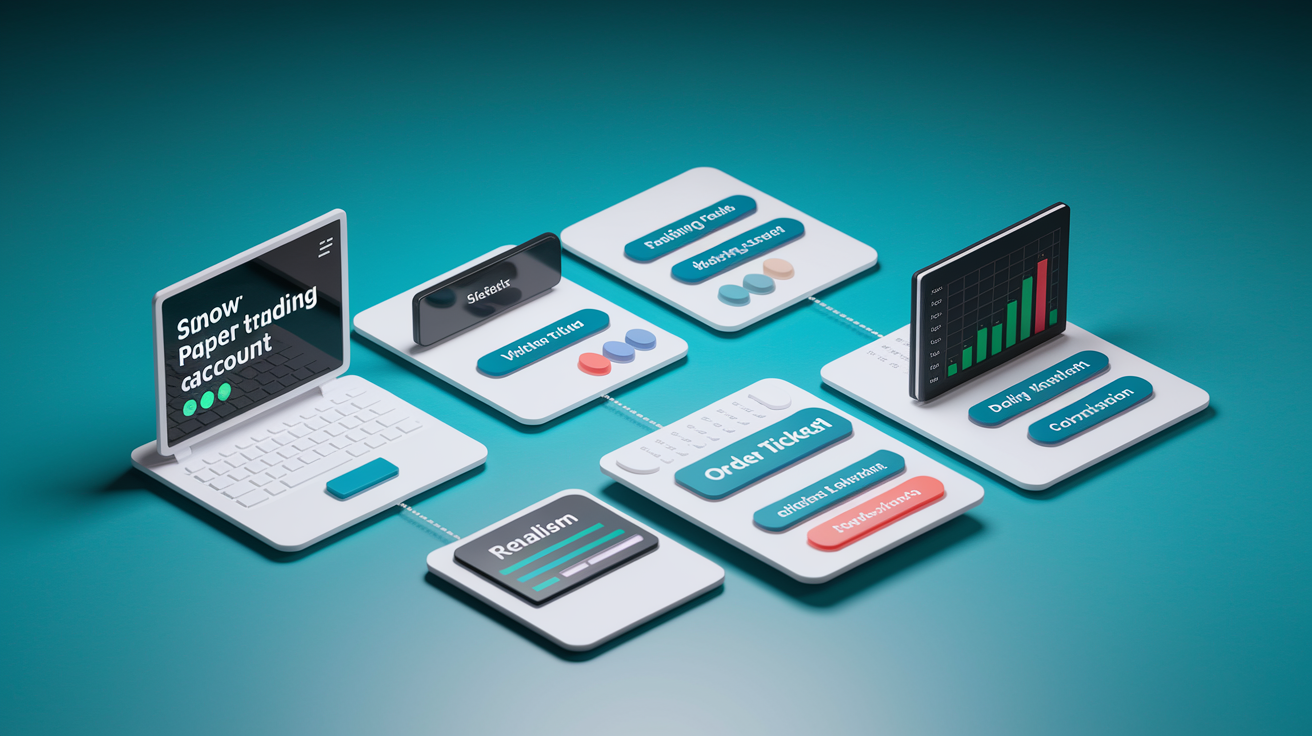
Choose a simulator. Pick a broker demo like MetaTrader, Thinkorswim, or Interactive Brokers. Or go standalone with TradingView paper trading. Use platforms with real-time or near-real-time data. Make sure it supports what you actually plan to trade: stocks, forex, futures, crypto.
Set realistic virtual capital. If you’re going live with $5,000, don’t practice with a $100,000 demo. Match the virtual balance to what you’ll actually use. Position sizing and risk management need to feel the same.
Create trading rules and risk parameters. Before your first simulated trade, write down entry criteria, stop placement, profit target, max position size, daily loss limit. Treat them like law.
Practice with order types. Use market orders, limit orders, stop orders, bracket orders in your demo. Learn how each one behaves and when to use which. If you’re trading options or futures, practice rolling positions and managing spreads.
Review results daily. At the end of every session, log your trades. Screenshot the setup, note why you entered, where you exited, whether you followed your rules. Track P&L, sure. But also track process. Did you wait for your setup? Did you honor your stop? Those answers matter more than whether the trade made money.
Adjust settings for realism. If your platform models slippage and commissions, turn those on. Set them conservatively. Assume wider spreads and worse fills than the simulator defaults. The goal is closing the gap between demo and live before you risk real capital.
Paper Trading Platforms and Apps Overview
The best simulator is the one you’ll use when you go live. That means picking based on what you trade, data quality, and the tools you get for order management and analysis. Some platforms are great for charting and scanning. Others excel at execution speed or multi-asset support. Desktop platforms usually offer more advanced features. Mobile apps focus on simplicity and quick checks.
When you’re evaluating platforms, focus on three things: data speed (live beats delayed), order-type flexibility (can you practice stop-limit, trailing stop, bracket orders?), and performance reporting (does it auto-track win rate, P&L per trade, max drawdown?). The platform should also let you set a realistic virtual balance. If it forces you into a $100,000 demo when you’re starting live with $10,000, the sizing practice won’t transfer.
| Platform | Starting Balance | Key Features |
|---|---|---|
| Interactive Brokers (IBKR) | $10,000 minimum | Multi-asset (stocks, options, futures, forex); SmartRouting; web, desktop, and mobile access |
| Thinkorswim (Schwab) | $100,000 default | Advanced charting, scanning tools, practice with options spreads and complex orders |
| TradingView | User-defined | Browser-based, real-time charts, simple order entry, ideal for stock and crypto testing |
| TradeStation | $100,000 default | Extensive historical data for backtesting, supports stocks, futures, options, crypto |
| Webull / eToro (mobile) | $100,000 default | Mobile-first design, quick setup, good for practicing small-cap stocks and crypto |
Best Practices for Effective Paper Trading
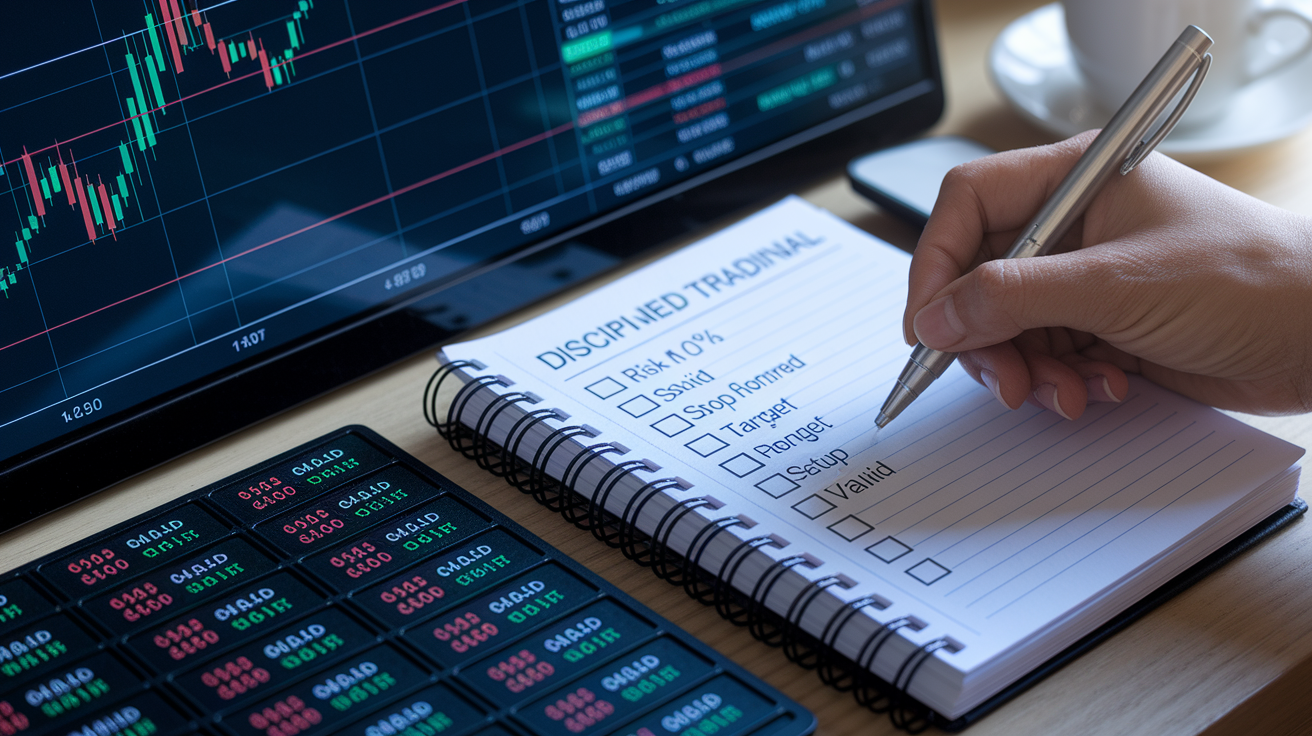
Match your demo position sizes to the real capital you’ll deploy. If your live account’s $5,000 and you risk 1% per trade, your simulated trades should risk $50 each. Not $500 or $5,000. That discipline forces you to plan realistic entries and exits. Builds habits that transfer when you go live. Predefine every rule before you start: where you enter, where your stop sits, what your target is, what invalidates the thesis. Write it down. Execute it exactly as written on every trade.
Keep a trade journal and log every setup. Screenshot the chart at entry. Note your reasoning. Record the outcome. Score whether you followed the plan. The metrics that matter: win rate, average gain per winner, average loss per loser, whether you stuck to your rules. Aim for at least 30 to 50 trades on a single strategy before you judge it. Fifty simulated trades give you way more signal than two live ones. They let you see if the setup works across different market conditions. Trending days, choppy days, high-volume sessions, low-volume sessions.
At the end of each week, review your journal and ask: Did I wait for my setup, or did I chase? Did I honor my stop, or did I widen it? Did I take profit at my target, or did I let it turn into a loss? The goal isn’t perfection. It’s consistency. If you can execute the same way on trade 50 as you did on trade 1, you’re building the muscle memory you need for live trading.
Common Mistakes Traders Make with Paper Trading
Simulators are useful, but easy to misuse. The most common failure is treating the demo like a video game. Trading for entertainment. Ignoring risk limits. Racking up huge virtual gains that teach you nothing about real discipline. The second biggest mistake is assuming demo performance will transfer directly to live markets. It won’t. Execution’s cleaner, emotions are absent, consequences don’t exist.
Treating demo like a game. Taking random trades, overtrading setups you wouldn’t touch with real money, playing “how big can I grow this account” instead of practicing realistic execution.
Using unrealistic leverage. Sizing positions like you’ve got a $100,000 account when your real bankroll is $5,000. Risk tolerance doesn’t scale.
Ignoring stops. Letting losing trades run because “it’s just paper” instead of cutting the loss at your predefined level.
Cherry-picking trades for the journal. Only logging winners or setups that worked. Hiding the real win rate. Making the strategy look better than it is.
Assuming demo results transfer. Expecting the same fill quality, execution speed, emotional calm when you go live. Performance almost always dips initially.
Overextending demo duration. Staying in simulation for months because you’re procrastinating the emotional risk of live trading. At some point, you have to test the discipline with real money.
The fix for all of these is simple. Treat the simulator like it’s real. Use the same position sizes you’ll use live. Follow the same rules. Honor the same stops. Log every trade: winners, losers, breakevens, rule violations. The goal is building repeatable habits, not racking up fake profits.
Transitioning from Paper Trading to Live Markets

There’s no magic number of demo trades that makes you ready, but 30 to 50 executions on a single strategy gives you enough data to see if the setup has an edge and whether you can follow the plan consistently. Readiness isn’t about profitability. It’s about behavioral consistency. Can you execute the same way on trade 50 as you did on trade 1? If yes, you’re ready to test the strategy with real capital.
Start small. Fund an account with money you can genuinely afford to lose. Not rent money. Not grocery money. Keep the same written rules you used in simulation and scale position sizing to match the smaller balance. If your demo account was $10,000 and you risked 1% per trade ($100), and your live account is $2,000, your risk per trade should be $20. Same percentage. Smaller dollar amount. Expect your performance to dip initially. Fills will be worse. Spreads will be wider. The emotional pressure will change how you execute. That’s normal. The first live trades are about proving you can follow the plan under real conditions, not about immediate profit.
Keep your demo account active even after you go live. Use it to test new setups, trial different order types, rehearse scenarios you haven’t encountered yet. Many experienced traders run simulations permanently alongside their live trading. It’s a free lab for testing ideas without risking capital. When you add a new setup to your live rotation, run it through 20 or 30 demo trades first to confirm the mechanics and refine the entry/exit rules. That habit reduces expensive surprises and keeps the learning process low-cost.
Final Words
You’re in the action: we defined paper trading, showed how simulators work, and flagged limits like delayed data and cleaner fills.
We covered the benefits, how to set up realistic demos, platform choices, and rules to test.
We compared demo to live, listed common mistakes, and gave a transition plan. Start small, expect an early dip, and use 30–50 trades as your check.
Treat paper trading as rehearsal. Keep rules tight, journal trades, and you’ll improve the odds when you go live.
FAQ
Q: How does paper trading work?
A: The paper trading process simulates real trades using virtual balances—originally recorded on paper, now via digital simulators. Platforms track P&L, win rate, use live or delayed data, and often show cleaner-than-real fills.
Q: Is it possible to make $1000 a day day trading? Is $100 enough for day trading?
A: Whether $100 is enough and whether you can make $1,000 daily: $100 typically limits position sizing and realistic profits; $1,000/day requires much larger capital or risky leverage. Focus on a small edge and strict risk controls.
Q: Can I paper trade for free?
A: You can paper trade for free using many brokers and charting platforms that offer demo accounts; expect delayed data or idealized fills on some apps, so add fees and slippage to your settings for realism.