
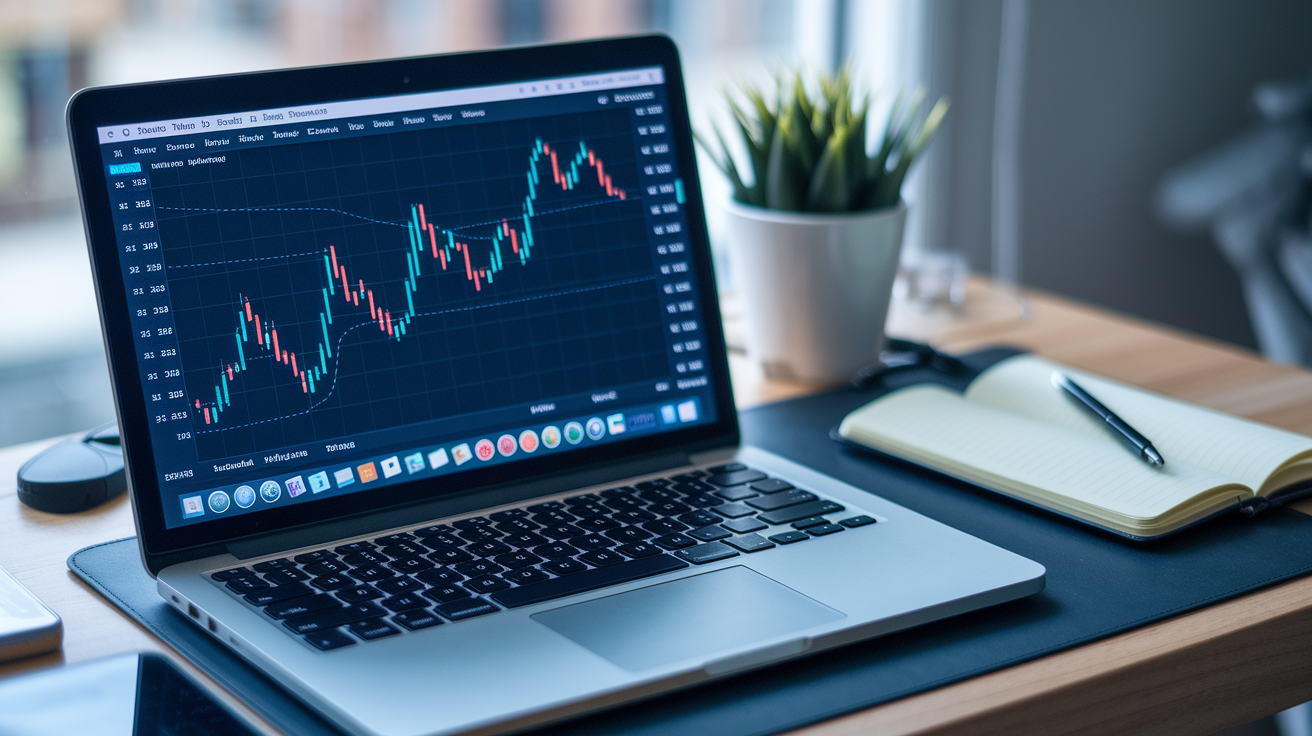

Think you need real money to learn trading?
Paper trading is simulated buying and selling with virtual cash, so you can practice order types, test strategies, and learn a platform without risking real capital.
If you use it right, it’s a training ground to prove a plan, fix execution errors, and build risk habits before real money hits the line.
This post explains how paper trading works, what it hides compared to live trading, and how to treat it like a lab that makes your live transition cleaner and safer.
Clear Explanation of Paper Trading and How It Works

Paper trading is simulated buying and selling of securities using virtual money. You practice strategies, test execution, and learn platforms without risking real capital. Sometimes called demo trading or virtual trading, it lets beginners place trades with fake currency while watching real-time market data. Most platforms default to virtual balances between $10,000 and $100,000, with many starting at $100,000.
The purpose is straightforward: learn mechanics and prove strategy before committing actual dollars. If you’ve never bought a stock, you can test the process. See how order types work. Understand what happens when price moves against you, all without the financial sting. It’s a controlled environment designed to accelerate learning and catch costly mistakes before they become expensive.
Paper trading matters because it removes financial pressure during the early learning curve. You can fail safely, replay decisions, and refine your process until the workflow becomes repeatable. The goal isn’t to achieve imaginary profits but to build competence and prove you can follow a plan under realistic conditions.
Step by step workflow:
- Open a paper trading account or enable simulator mode on a supported platform.
- Set starting virtual cash, ideally matching the amount you plan to trade in real life, such as $10,000.
- Write a trading plan defining instruments, entry and exit rules, position size limits, and numeric risk per trade.
- Place simulated orders using market, limit, or stop instructions, and record fills and timestamps.
- Monitor positions and track key performance metrics, including win rate, average return, and maximum drawdown.
- Iterate on strategy and journal every trade for at least several weeks, refining approach until results become consistent.
Why Paper Trading Differs From Real Trading
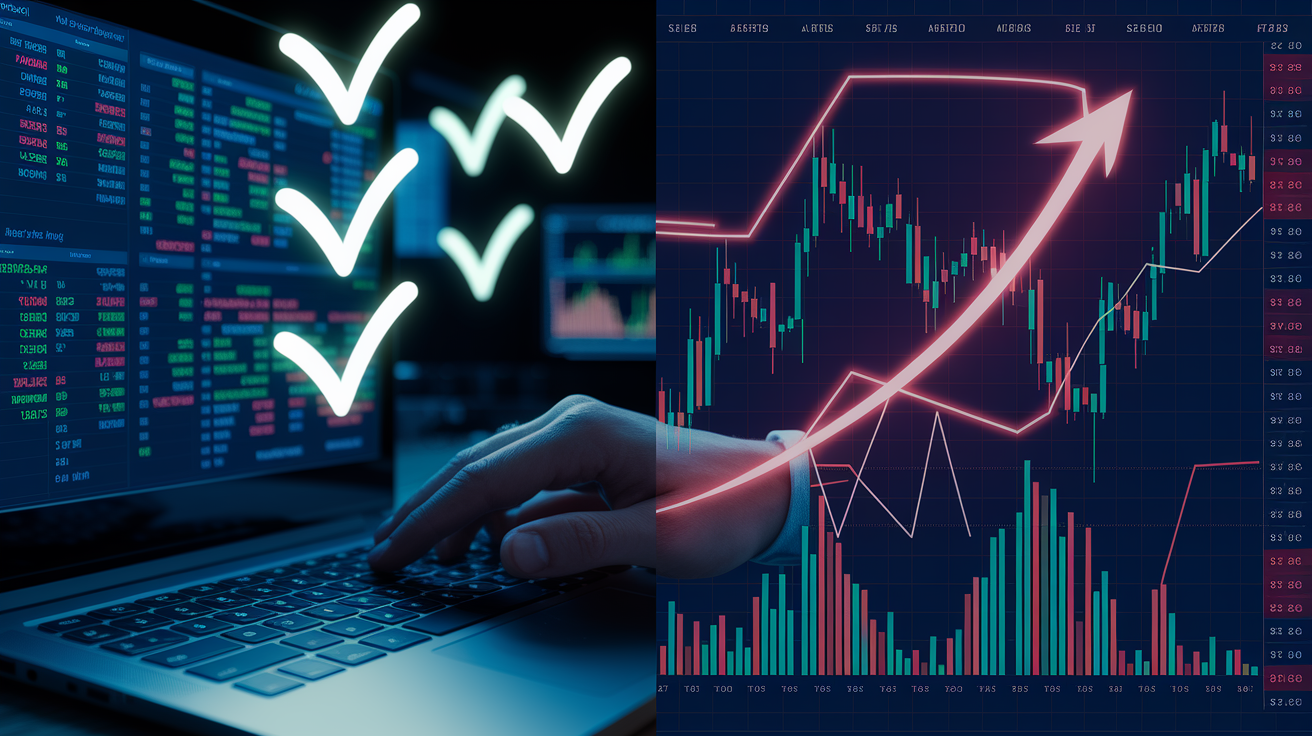
Paper trading and live trading look the same on screen but behave differently in critical ways. Simulated fills often execute instantly at your desired price. They ignore the order book depth and liquidity constraints that delay or degrade real fills. Real slippage can cost multiple ticks or a percentage of price, especially during high volatility or when trading less liquid instruments. Many simulators omit or simplify commissions, rebates, and regulatory fees. This creates an unrealistic performance profile.
The emotional gap is even larger. Virtual P&L doesn’t trigger the same stress, fear, or greed that real losses and gains create. A $2,000 simulated drawdown feels different from watching actual capital evaporate. That difference shapes decision making. Paper traders often overtrade, widen stops, and hold losing positions longer because the consequence is abstract. When real money enters the equation, those behaviors collapse under emotional pressure.
Main simulation gaps:
- Execution quality: Instant fills and no partial fills distort the speed and reliability of real order routing.
- Emotional realism: No financial risk eliminates the psychological pressure that influences real decisions.
- Cost modeling: Missing fees, spreads, and slippage inflate simulated returns compared to live results.
- Market impact: Large orders fill immediately in simulation but may move price or fail to fill completely in live markets.
Practicing Trading Strategies With Simulated Tools
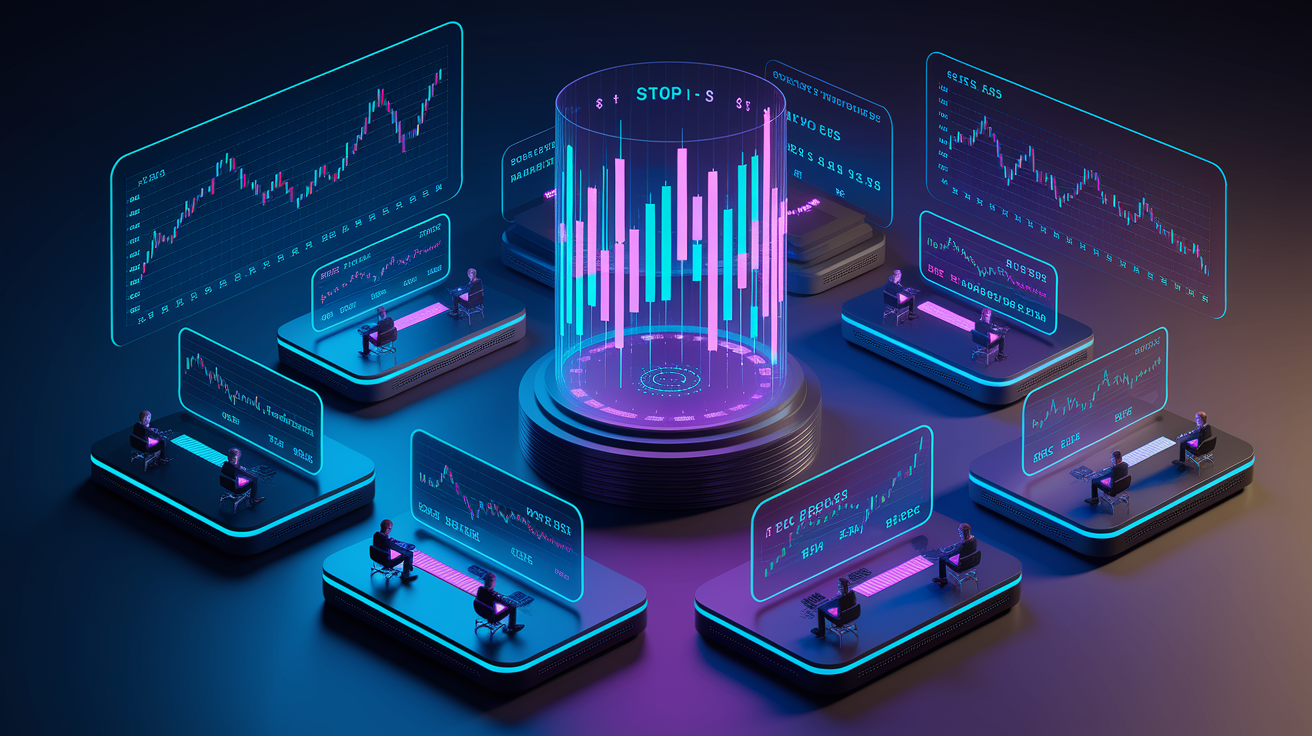
Paper trading is the primary solution for testing untested strategies and refining new ideas. Traders use simulators to practice day trading, swing trading, shorting, and options strategies across different market conditions. The virtual environment allows iteration without consequence. It provides immediate feedback on whether a trade thesis holds, how order types behave, and what happens when stops are too tight or targets too aggressive. For example, a trader might short a momentum stock after a parabolic move and discover their stop gets hit repeatedly because volatility spikes during the pullback. That’s something impossible to learn from a book.
Real time quotes, technical indicators, candlestick patterns, and charting packages are available in most simulators. Beginners can practice drawing trendlines, marking support and resistance, and interpreting moving averages or RSI divergences. Watching how price interacts with these levels in a live market builds pattern recognition faster than studying static examples. When a stock breaks down through the 200 day moving average and continues lower, the visual and emotional memory sticks.
Platforms also support multiple order types: market, limit, stop, stop limit, and bracket orders. You learn the mechanics of placing a stop loss at the same time as entry. How to trail a stop as price moves in your favor. What happens when you accidentally place a market order during a thin pre-market session. Each mistake is educational and free.
Technical Analysis Practice
Chart reading improves through repetition. Paper trading gives you a live canvas to mark levels, test breakout and breakdown scenarios, and confirm whether your analysis translates into executable trades. Watch how price respects or violates your trendlines. Notice when volume confirms a move or warns of a trap. This hands on work builds the pattern library that lets you read charts quickly under pressure.
Strategy Refinement Methods
Once you’ve identified a promising setup, paper trading lets you refine entry timing, sizing, and exit logic. Run the same strategy across multiple securities and timeframes. Track which conditions produce the best risk to reward and where the thesis consistently fails. You’ll see whether tight stops improve consistency or just generate whipsaws. Whether scaling into positions beats single entries.
| Strategy Type | What Paper Trading Helps Measure |
|---|---|
| Day trading momentum | Entry timing, stop placement, profit target realism, overtrading risk |
| Swing trading breakouts | Volume confirmation, false breakout rate, hold duration, position sizing |
| Shorting parabolic moves | Risk of squeeze, stop loss width, borrow availability (if modeled) |
| Options spreads | Theta decay, strike selection, profit curve, early assignment risk |
| Mean reversion at support | Level accuracy, win rate, average hold time, invalidation speed |
Using Paper Trading for Risk Management Skill Building

Paper trading is the safest lab for testing risk rules before your account depends on them. The 1 to 2% risk per trade guideline is easy to read but harder to execute without practice. In a simulator, set your position size so a stopped out trade costs exactly 1% of virtual equity, then watch what happens to your account when you hit three losses in a row. You’ll see the drawdown, the emotional urge to revenge trade, and the path back to breakeven. Treat the stop like a smoke alarm. It’s not a suggestion.
Position sizing is more than a formula. It’s a repeatable process: measure distance from entry to stop, calculate share quantity that caps loss at your risk threshold, verify the math, and execute. Paper trading forces you to do this calculation every time, building the habit before real money makes every mistake expensive. You’ll also discover whether your stop placement is realistic or whether you’re setting stops so tight they guarantee repeated small losses.
Six practical risk skills to practice in simulation:
- Calculating position size based on entry, stop, and max loss percentage (commonly 1 to 2%).
- Setting stop loss orders immediately after entry and never widening them mid trade.
- Tracking max drawdown and understanding how consecutive losses compound.
- Testing risk to reward ratios (e.g., 2:1, 3:1) and measuring actual achieved ratios over time.
- Diversifying across sectors or instruments to reduce single position concentration risk.
- Enforcing daily loss limits to prevent revenge trading after a bad session.
Choosing the Right Paper Trading Platforms and Tools

Not all simulators are equal. The best platforms deliver real time market data, realistic order routing behavior, and the ability to model fees and slippage. Thinkorswim paperMoney (TD Ameritrade) is a widely used desktop platform that defaults to $100,000 virtual cash and offers advanced charting, options chains, and scanners. TradingView Paper Trading runs in a browser or mobile app, combining clean charts with realistic order types and social community features. Interactive Brokers PaperTrader mirrors the professional IB Trader Workstation interface, ideal for users planning to trade futures or forex.
Webull paper trading provides mobile friendly access with real time quotes and simple execution, suitable for equity and options beginners. EToro virtual portfolio adds copy trading and social features, letting users practice following other traders’ strategies with virtual funds. Investopedia Simulator is beginner focused and educational, often starting at $100,000, though it may lack the advanced order types pros need.
The right platform depends on what you plan to trade and where you’ll eventually open a live account. If you’re heading to a specific broker, use their paper trading tool so the interface and behavior match. If you’re testing strategies across multiple instruments, prioritize platforms with robust charting, scanner tools, and analytics over simple buy and sell simulators.
Essential features to look for:
- Real time or near real time market data, not delayed quotes.
- Ability to set a custom virtual balance matching your planned live capital.
- Support for all order types you intend to use: market, limit, stop, stop limit, bracket, trailing stop.
- Simulated or configurable commission and slippage models to reflect realistic costs.
- Trade history, P&L reporting, and performance analytics for post trade review.
- Access to the instruments you plan to trade: stocks, options, futures, forex, or crypto.
Journaling and Tracking Simulated Portfolio Performance
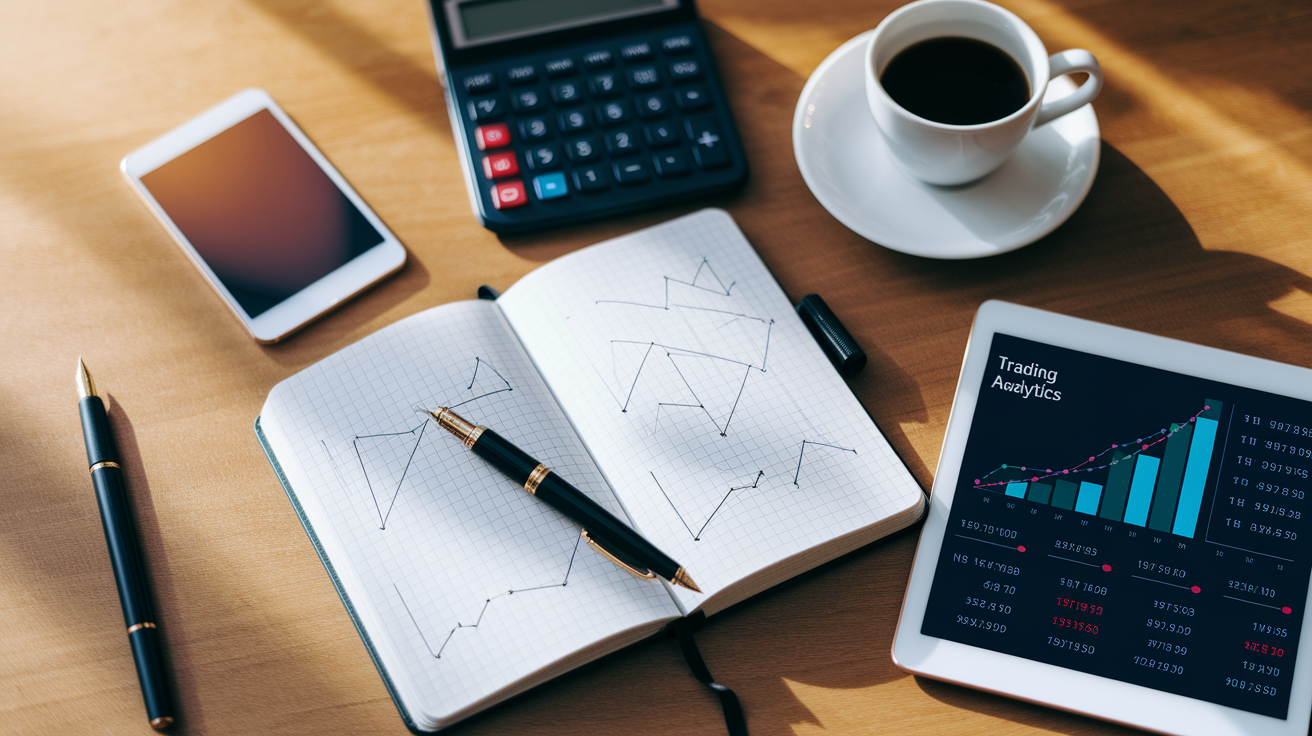
Numbers don’t lie, and paper trading generates the data that reveals whether your process works. Keep a journal recording every trade’s entry price, exit price, position size, entry rationale, exit reason, and post trade review. When you look back after fifty trades, patterns emerge. You’ll see whether you’re cutting winners too early, letting losers run, chasing breakouts, or ignoring your own rules. That awareness is the difference between repeating mistakes and fixing them.
Tracking performance isn’t about celebrating virtual profits. It’s about validating consistency. A winning streak might result from luck or a favorable market environment, not skill. Measure your results across different conditions. Volatile and calm. Trending and choppy. If win rate and average return stay stable, the strategy has merit. If they collapse when conditions shift, the thesis needs work or tighter filters.
Important Metrics to Track
- Win rate: Percentage of trades closed for a profit. Helps identify whether the strategy’s edge is statistically meaningful.
- Average profit vs. average loss: Determines if winners are large enough to offset losers and cover costs.
- Maximum drawdown: Largest peak to trough decline in equity. Shows how much heat the strategy can generate.
- Risk to reward ratio (planned vs. actual): Compare your intended target to stop ratio against what you actually achieved.
- Trade frequency and overtrading signals: Count trades per week. Rising frequency without rising quality suggests emotional or impulsive execution.
Common Paper Trading Mistakes and How to Prevent Them
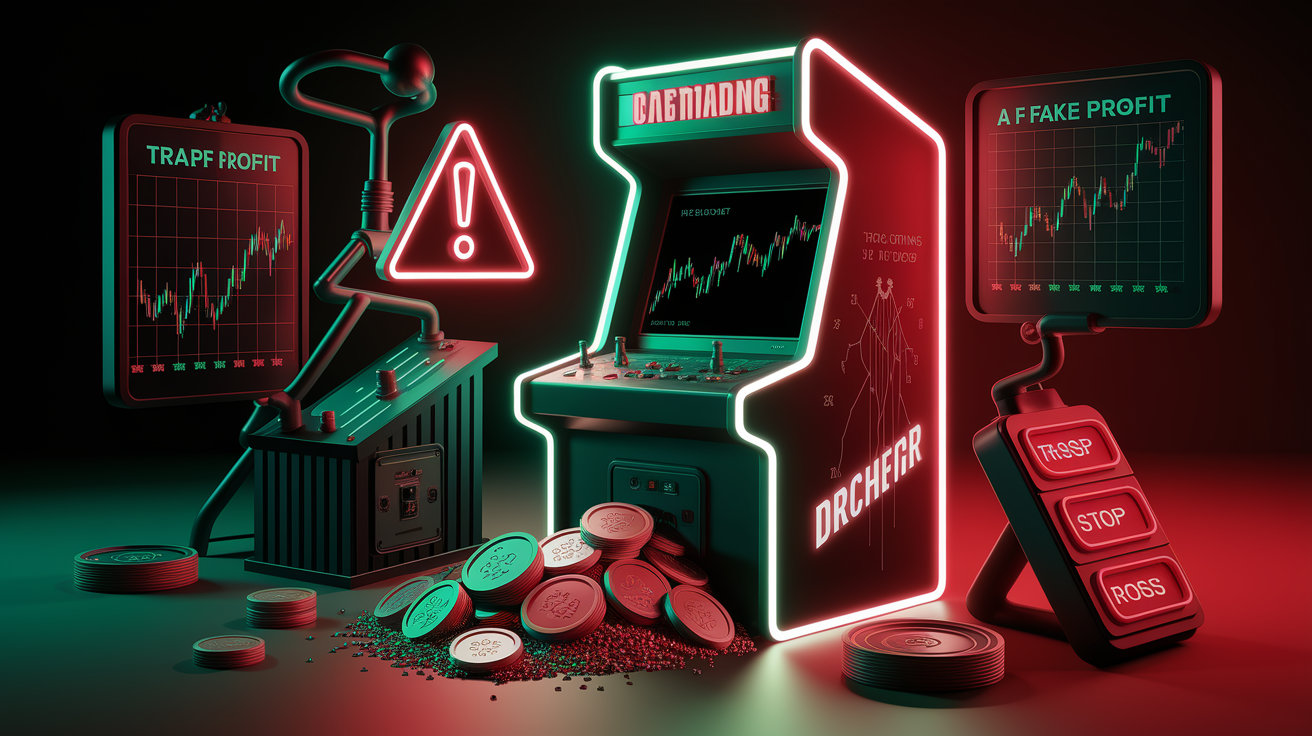
The biggest mistake is treating simulation like a game. Without real financial pain, traders place oversized bets, ignore stops, and overtrade because consequences feel abstract. A $50,000 virtual loss stings less than a $500 real one, so behavior shifts. You might hold a loser hoping for a miracle. Widen a stop to avoid being stopped out. Revenge trade after a bad session. These habits cement during practice and resurface under live pressure.
Ignoring fees and slippage creates another trap. Many simulators fill orders instantly at the exact limit price, something that rarely happens in real markets. Commission free models might skip the spread or exchange fees that reduce real returns. If your paper trading P&L shows consistent $200 wins but you’re not accounting for $10 round trip commissions and $5 of slippage per trade, your real edge might be $185 or less. A meaningful difference over dozens of trades.
Five major mistakes:
- Using unrealistic position sizes or virtual balances far larger than you’d risk in real life.
- Skipping trade journaling and performance tracking, losing the learning benefit.
- Overtrading because there’s no financial consequence, building bad execution habits.
- Ignoring commissions, spreads, slippage, and market impact costs in results analysis.
- Stopping after a short lucky streak instead of practicing through multiple market conditions over months.
Six item prevention checklist:
- Set virtual cash equal to your planned real money allocation, not an inflated demo balance.
- Write a trading plan with specific entry and exit rules and risk limits before placing the first trade.
- Enable or manually calculate realistic commissions and model slippage (e.g., 1 to 3 cents per share on liquid stocks).
- Enforce the same stop loss and position sizing rules you’d use with real capital. Never widen stops mid trade.
- Keep a detailed trade journal with timestamps, rationale, and post trade review for every position.
- Commit to a minimum practice period of 3 months, tracking consistency across varied market conditions.
How to Transition From Paper Trading to Live Markets

Moving to real money is a staged process, not a single leap. Start with a small fraction of your intended capital, commonly 1 to 5%, to reintroduce emotional stakes without catastrophic risk. If you plan to trade with $10,000, begin live trading with $500. The dollar amounts are smaller, but the fear of loss and temptation to chase returns return immediately. You’ll discover whether the discipline you practiced in simulation holds when real money is on the line.
Keep the same rules and position sizing framework you tested in paper trading. Don’t change multiple variables at once. If your simulator strategy risked 1% per trade with a 2:1 reward to risk target, use identical rules live. This isolates emotional and execution variables, making it clear whether performance changes stem from psychological pressure or flawed strategy logic.
Expect slippage and partial fills. Real orders may not execute at your exact limit price. Market orders during volatile sessions can fill several cents or more away from the last quote. Limit orders might sit unfilled if price doesn’t reach your level. Monitor execution closely and compare live fills against your simulated experience. Adjust entry and exit techniques as needed, tightening limits or using marketable limit orders when appropriate.
Five step safe transition method:
- Fund a live account with 1 to 5% of your total planned capital to start.
- Use the exact same trading plan, risk rules, and position sizing formulas practiced in simulation.
- Place initial trades at reduced size to acclimate to emotional pressure and real execution behavior.
- Track live performance for at least one month, comparing results and behavior against paper trading metrics.
- Increase capital allocation gradually only after demonstrating consistent results and emotional control over multiple months.
When to Move Beyond Paper Trading and Seek Further Guidance

Paper trading is not a permanent solution. Most traders practice for 3 to 6 months or until they achieve repeatable, consistent results across different market environments. If your simulated performance shows steady returns with controlled drawdowns and you’ve proven you can follow your own rules, it’s time to transition to live capital using the staged approach. If results remain inconsistent, emotions override your plan, or you struggle to identify why trades succeed or fail, extend the practice period or seek additional learning resources.
Simulation can’t fully replicate the psychology of real trading. Fear, greed, and the urge to deviate from rules intensify when actual money is at risk. Paper trading builds mechanical skill, platform familiarity, and strategic frameworks. But live trading teaches emotional discipline under fire. Recognize that your first live trades will feel different, and plan for that gap by starting small and moving slowly.
Four next step options when ready to advance:
- Enroll in structured trading courses or mentorship programs focused on risk management and behavioral discipline.
- Join trading communities or forums where experienced traders share real time feedback and accountability.
- Read educational books on market psychology, execution tactics, and institutional trading behavior.
- Work with a coach or mentor who reviews your trade journal, identifies blind spots, and helps refine decision making under live conditions.
Final Words
In the action, paper trading gives you a risk-free way to practice order entry, chart reading, and position sizing with virtual cash. It teaches tools and rules while showing where demos differ from live fills and real nerves.
We covered how to test strategies, track results, pick platforms, avoid common simulation mistakes, and move to live trading safely.
Remember the core question – what is paper trading – and treat it as a rehearsal. Stay disciplined, start small, and you’ll build real confidence.
FAQ
Q: How does paper trading work?
A: Paper trading works by simulating real trades with virtual money in a demo account (often $10,000–$100,000). You set a balance, place simulated orders, review fills and performance, and refine your plan without risking cash.
Q: Do you make real money from paper trading?
A: You do not make real money from paper trading; it uses virtual cash. It teaches order entry, strategy testing, and recordkeeping so you’re better prepared to earn real profits when you move to live markets.
Q: Can I make $1000 per day from trading?
A: Making $1000 per day from trading is possible but depends on capital, edge, and disciplined risk management. Treat it as a long-term goal: test in simulation, validate consistency, then scale slowly with strict sizing rules.
Q: Why do 99% of day traders fail?
A: Ninety-nine percent of day traders fail because they lack a repeatable edge, use poor risk control, overtrade, or trade emotionally. Fix this with a written plan, proper position sizing, and consistent journaling.