


Do buyback announcements really lift stocks, or are they smoke and mirrors?
Quick answer: they often spark a fast pop, but whether that pop lasts depends on size, credibility, and execution.
When a company says it will buy shares, traders see fewer floating shares, a management vote of confidence, and an anticipated EPS boost, so prices often gap up before repurchases begin.
Thesis: announcements move price quickly when they change expected supply or signal real confidence; they fade if the authorization is tiny, debt-funded, or never executed.
Immediate Price Reac tion to Buyback Announcements
Stock prices tend to pop pretty fast once a buyback gets announced. Sometimes it’s minutes. Sometimes 48 hours. The jump happens because the market expects fewer shares floating around and reads management’s move as a vote of confidence. When a company says it’s committing billions to buy its own stock back, traders see near-term demand and usually bid things up before a single share actually gets repurchased.
How quick the move is depends on how much new info the announcement actually carries. Big program relative to the float? Company’s got the cash to back it up? Traders pile in right away. But if the authorization’s tiny or the company’s got a track record of announcing programs and never following through, the initial bump can be weak or nonexistent.
Here’s what drives short-term movement after buyback news:
Expected reduction in share supply. Fewer shares out there can mechanically push price higher if demand stays steady.
Signal of undervaluation. Management deciding to buy stock tells you they think current prices are attractive.
Anticipated EPS boost. Retiring shares lifts earnings per share even when total profit doesn’t budge.
Creation of a price floor. Markets figure the company will step in as a buyer if shares dip, which puts a limit on downside.
Institutional repositioning. Funds and algos often rebalance when repurchase programs change the share count or signal a shift in capital allocation.
The size of the immediate lift varies a lot. A $40 billion authorization from a mega-cap tech company in 2023 drove a nearly 20% surge in one week because the size mattered relative to trading volume and the firm had actually executed aggressively in the past. Smaller announcements by less liquid names might produce single-digit moves or nothing at all if investors doubt completion or if broader market conditions are weak.
Signaling Effects and Management Confidence
Buyback announcements carry more than just the mechanical impact on share count. When a board authorizes repurchases, it’s telling the market that insiders believe the stock’s undervalued or that future cash flows can support the spending. This signal can matter more than the buyback itself, especially when management’s got a solid track record with capital allocation.
The market treats repurchase programs like a confidence vote. If a company announces buybacks during a selloff or right after disappointing earnings, the message is pretty clear: “We think this dip’s temporary and we’re backing that up with our own cash.” That credibility can stop a falling stock or speed up a rally. But announce a buyback alongside weakening fundamentals or rising debt? Investors get skeptical fast. They’ll read it as a short-term prop instead of genuine belief in value.
Three core signals baked into buyback announcements:
Management sees the stock as cheap. Insiders have better information about future plans and cash generation, so their willingness to buy shares at current prices implies they expect those shares to be worth more later.
Excess cash position is sustainable. Authorizing a large repurchase program signals that free cash flow’s strong enough to return capital without hurting operations or growth investment.
No better uses for capital. Choosing buybacks over acquisitions, R&D expansion, or dividend increases suggests management views share repurchases as the highest return option available right now.
Market Efficiency and Investor Interpretation

In semi-strong efficient markets, all publicly available information (including buyback announcements) gets priced into shares almost immediately. Algorithms, institutional desks, and retail platforms parse the news within seconds. The stock adjusts before most individual investors can even react. This rapid incorporation means the full expected benefit often shows up in the first trading session, leaving little room for easy post-announcement gains.
Investor interpretation shifts with context. A buyback announced during a bull market at all-time highs might get viewed as defensive or a sign the company lacks growth opportunities. Same dollar amount announced during a bear market or after a sharp pullback? That tends to get received as opportunistic and value-accretive. Macro conditions (interest rates, recession risk, sector rotation) color how the market reads management’s intent.
Differences in interpretation also reflect company-specific credibility. Firms with a history of announcing programs and actually completing them earn trust. Their announcements move prices more. Companies that repeatedly authorize buybacks but only execute a fraction? They face skepticism, and their announcements produce muted or short-lived price reactions. The market learns which signals to trust and which to ignore.
Announced vs. Actual Buybacks: Divergent Market Effects
Not every announced buyback program turns into actual share repurchases. Boards often authorize maximum dollar amounts or share counts without committing to a timeline or minimum execution level. Some programs sit idle for quarters or years. Others get completed ahead of schedule. Markets react to the announcement, but whether that reaction sticks depends entirely on follow-through.
When a company announces a buyback and then executes aggressively, the initial price gain tends to hold or build as the company becomes a consistent source of demand. When execution lags or the program quietly gets shelved, early price strength usually fades. Investors who bought on the announcement end up holding a stock whose buyback-driven support never showed up. The price drifts back toward pre-announcement levels or lower.
| Announced Buybacks | Actual Repurchases | Typical Market Reaction |
|---|---|---|
| Board authorizes maximum dollar amount, no obligation to complete | Company executes open-market purchases or tenders over time | Initial price lift on announcement, sustained only if execution follows |
| Often framed in press releases as large headline numbers | Quarterly filings reveal actual shares repurchased and dollars spent | Credibility built or lost based on gap between authorized and executed |
| May be announced to influence short-term sentiment or support stock during weakness | Real reduction in share count, tangible impact on EPS and ownership concentration | Market rewards consistent execution, punishes broken promises with skepticism on future announcements |
| No immediate cash outlay, announcement alone can move price | Cash leaves balance sheet, debt may increase if program’s funded by borrowing | Long-term price appreciation depends on repurchases at reasonable valuations and underlying business strength |
When Buyback Announcements Lead to Price Declines
Buyback announcements don’t guarantee a positive stock reaction. Prices can drop on the news when investors interpret the program as a signal of trouble rather than confidence. If a company announces buybacks while revenue’s shrinking or margins are compressing, the market may read the move as an attempt to prop up EPS instead of fixing the underlying business. That perception often triggers selling, not buying.
Debt-funded buybacks also raise red flags. When a firm borrows to repurchase shares, it increases financial risk without improving operations. If interest rates are high or the balance sheet’s already leveraged, the announcement can spook investors who worry about future debt service and reduced flexibility. The stock may drop as traders price in higher default risk or lower credit ratings.
Timing matters too. Buybacks announced at or near all-time highs suggest management may be overpaying for shares, destroying value rather than creating it. If the company has a history of buying high and cutting programs when shares are cheap, the announcement reinforces a pattern of poor capital allocation. In those cases, the stock often sells off because investors lose confidence in management’s ability to deploy cash intelligently.
Factors Influencing the Magnitude of Price Impact

The size of the price reaction depends on how the announcement stacks up against expectations and current conditions. A $10 billion buyback moves a $50 billion market cap company way more than a $500 billion giant. The percentage of shares targeted for repurchase relative to the free float determines how much supply pressure the program can relieve. Larger programs create bigger immediate moves and more sustained support if execution follows.
Market conditions shape the reaction. Buyback announcements during periods of high volatility or widespread selling can act as a stabilizer, giving nervous investors a reason to hold or add. In calm, rising markets, the same announcement may produce only a modest bump because the stock was already well bid. Sector norms also matter. Tech firms routinely announce massive programs and investors expect them. When a traditionally conservative utility or industrial announces buybacks, the surprise factor can amplify the move.
Key factors that amp up or dampen buyback-related price reactions:
Program size relative to market cap and free float. The bigger the authorization as a percentage of shares outstanding, the stronger the potential impact.
Company’s execution history. Firms with a track record of completing programs earn larger immediate reactions. Repeat non-executors see muted moves.
Current valuation level. Buybacks announced when shares trade at low multiples get viewed as value-accretive. Announcements at high valuations raise concerns about overpaying.
Funding source. Cash-funded programs signal strength. Debt-funded or asset-sale-funded repurchases trigger caution.
Broader market sentiment and volatility. Buybacks announced during selloffs often produce outsized relief rallies. Announcements in strong markets may be met with indifference.
Earnings and revenue trends. Programs paired with growing fundamentals reinforce confidence. Buybacks amid declining sales or margins invite skepticism.
Real World Case Studies of Buyback Reactions
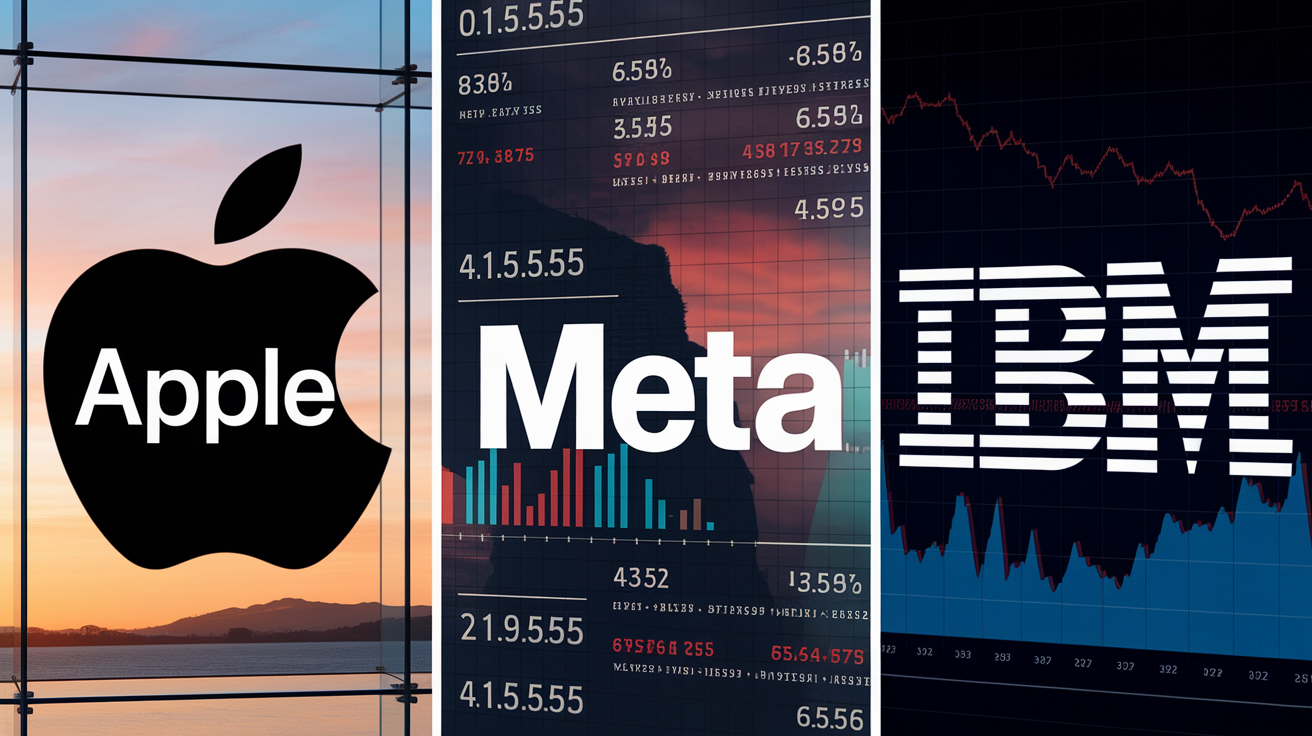
Apple announced a major buyback expansion in 2013 and has executed consistently since, repurchasing $674 billion through mid-2024 and reducing share count by 41%. The stock climbed more than tenfold over that period. Each quarterly earnings release that confirmed aggressive buyback execution reinforced investor confidence. The steady reduction in shares outstanding amplified per-share gains as revenue and profit grew. Apple’s case shows how large, sustained repurchases at reasonable valuations can turbocharge long-term returns when paired with strong business performance.
Meta announced a $40 billion buyback authorization in 2023 after shares had fallen sharply on concerns about metaverse spending and slowing ad growth. The stock surged nearly 20% in the week following the announcement because the program was sizable relative to the depressed market cap and signaled management’s belief that the selloff was overdone. Meta followed through with aggressive execution, and the combination of buybacks and recovering fundamentals drove the stock to new highs within months. The announcement worked because it came at a low valuation and the company had the cash flow to support it without adding leverage.
IBM spent over $125 billion on buybacks between 2005 and 2015, much of it funded by debt, while revenue declined from $106 billion in 2011 to $81 billion in 2017. Despite the repurchases, the stock delivered negative returns through most of the 2010s and underperformed the broader market. Investors eventually recognized that IBM was using buybacks to mask stagnant growth rather than investing in transformation. The case shows how poorly timed, debt-fueled buybacks can destroy shareholder value when the underlying business is deteriorating and management overpays for shares at elevated valuations.
Final Words
In the action, buyback announcements usually spark a quick move, often a pop within minutes to 48 hours, driven by lower float expectations and signaling from management.
What matters next is follow-through, the program size, whether repurchases actually happen, and the macro backdrop. Watch for reversals when buybacks look like cover for weak cash flow.
If you want to trade these, remember the core of how stock buyback announcements affect share price is immediate pricing of news and later reality checks. Stay disciplined, size for the stop, and there’s a clear edge when you plan ahead.
FAQ
Q: What happens to share price when a company announces a buyback? Does share buyback improve share price?
A: When a company announces a buyback, the share price often jumps short term as traders expect fewer shares, higher EPS, and management confidence; gains usually show up within minutes to 48 hours but aren’t guaranteed.
Q: How do market announcements impact share prices?
A: Market announcements move share prices quickly because markets price in new information; the news’ size, clarity, timing, macro tone, and liquidity determine how fast and how large the reaction will be.
Q: What does Warren Buffett say about stock buybacks?
A: Warren Buffett says buybacks make sense when a company repurchases undervalued shares at sensible prices, raising intrinsic value per share; he warns against buybacks done when the stock is richly valued.