


What costs traders more than bad setups? Their own brains.
Fear, greed, and overconfidence turn clear plans into emotional reactions and blow accounts faster than a bad indicator.
This post cuts through the excuses and lays out the fixes that actually protect capital: preset stops, fixed position sizing, risk-reward screening, checklists, cooling-off rules, and simple breathing checks.
Read on to get the exact levels and rules that make trading repeatable, so you stop guessing and keep your account intact.
Core Psychological Pitfalls That Undermine Trading Decisions
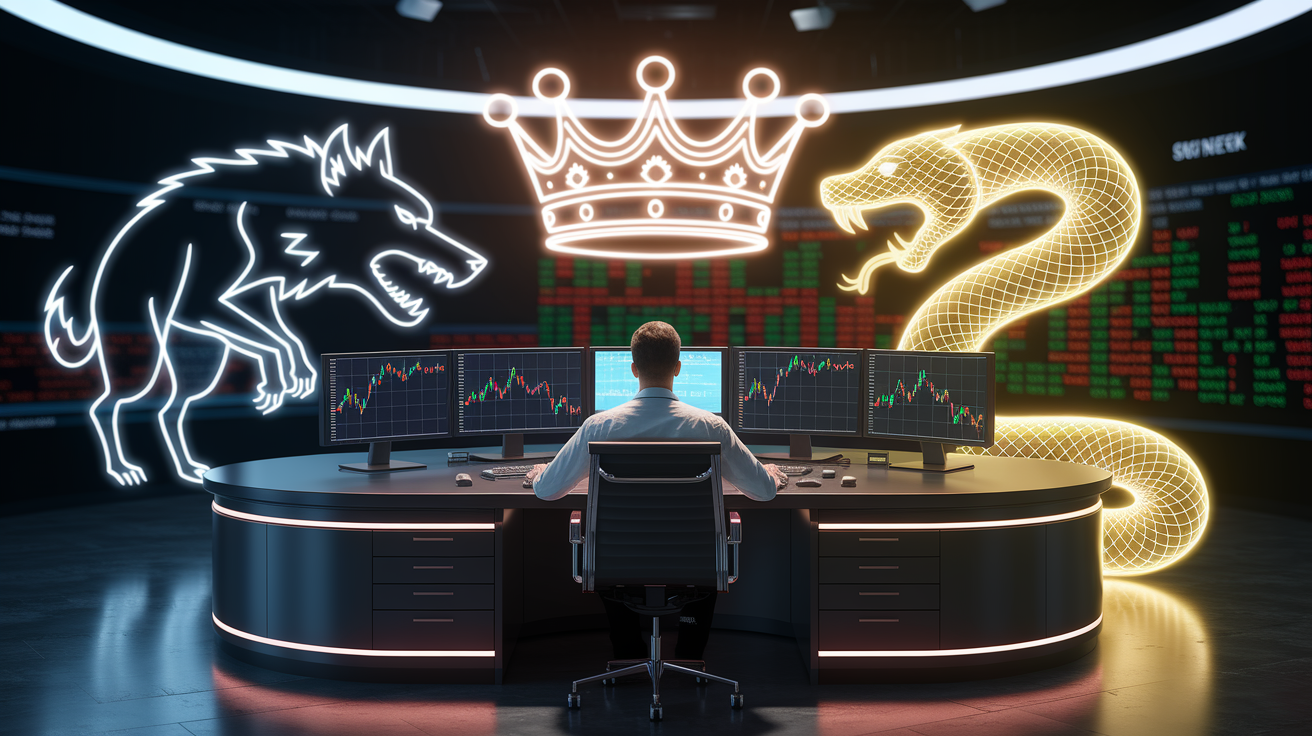
Fear shows up in two ways that wreck consistency. First, there’s fear of loss. It makes traders cut profitable positions way too early, bailing at breakeven or at the first minor pullback instead of letting the trade develop. Second, there’s FOMO. That’s the fear of missing out, and it drives late entries after the move’s already happened or forces trades when the setup doesn’t actually check all the boxes.
Greed throws every rule out the window. A clean 1:2 risk-reward exit turns into “just a few more ticks.” Traders move stops farther out to avoid getting “chopped out too soon,” ignore daily loss limits, and add to losing positions hoping for a reversal. Over-leveraging is the clearest sign. Risking 5% or 10% on one trade instead of the planned 1% because the setup “can’t miss.”
Overconfidence kicks in after winning streaks. A few profitable days and suddenly the rules feel optional. Position sizes grow, stops get sloppy, checklists disappear. Recent success feels like proof you’ve figured it out. Risk signals like high volatility or weak liquidity get ignored because you’re on a roll. The thesis goes from “if this level holds” to “this definitely works.”
These three—fear, greed, overconfidence—cause most psychology-driven mistakes because they operate live, under pressure, when real money’s moving and emotions spike. Most traders spend 90% of their time perfecting entries and 0% asking why they abandon those entries the second their P&L changes.
Cognitive Biases That Distort Market Judgement

Confirmation bias turns analysis into a hunt for what you want to see. You decide you’re going long, then you cherry-pick bullish signals and ignore bearish ones. A resistance level shows up? You downgrade it to “weak.” Volume drops, momentum diverges? You filter it out. And it doesn’t stop at analysis. Once you’re in the trade, you keep finding reasons it’s still valid even when it’s clearly not.
Recency bias gives too much weight to the last few trades. Three wins in a row and you assume the next one’s also a winner, so you size up. Two losses and you freeze or skip the next clean setup because the pain’s too fresh. It overreacts to small samples. A trader with a 60% win rate over 200 trades will ditch the whole strategy after four straight losses because those four feel bigger than the other 196.
Loss aversion creates lopsided behavior. Traders cut winners fast to “lock in gains” because profit feels fragile, but they hold losers way past the stop because taking the loss makes the mistake real. That’s the root of hope trading. Letting a -1R loss turn into -3R because closing it means admitting you were wrong. Loss aversion is why stops get moved. It’s also why revenge trading happens—the need to get it back overrides the plan.
Anchoring locks you into old reference points. A stock traded at 150 last month, now it’s at 130, so you think 130 is “cheap” without reassessing anything. You hold through new lows because the mental anchor says it has to bounce back. Anchoring messes with entries too. You miss a breakout at 105, then refuse to enter at 107 because you’re stuck on the price you originally wanted, even though the setup’s still solid.
These biases don’t feel like biases. They feel like logic. A trader holding past the stop will justify it with fresh analysis, but the real driver is loss aversion. Spotting the bias is step one. Building rules that override it is step two.
Practical Risk Management Tools to Counter Psychological Errors

Stop-loss strategy is the main brake on emotional decisions. A pre-set stop kills the in-trade question “should I bail?” and replaces it with a rule you made when you were calm. Fixed-price stops use technical levels—swing low, support, structure break—to define where the thesis fails. Volatility-based stops adapt to current conditions using ATR multiples. A common one is 2× ATR(20). If ATR is 0.50, the stop sits 1.00 from entry. The stop matches normal market movement instead of your fear.
Here’s a real example. You go long at 100.00. ATR(20) is 0.40. A 2× ATR stop puts risk at 0.80, so the stop goes at 99.20. Your account is $50,000 and you risk 1%, that’s $500. Position size = $500 ÷ 0.80 = 625 shares. The math forces consistency. Once the trade’s live, the stop is locked. If you’re tempted to move it, the rule is simple: close the position or take the original stop. No middle ground.
Position sizing prevents the overconfidence trap. Fixed-fractional sizing caps risk per trade at a percentage of equity, usually 0.5% to 2%. The formula:
Risk $ = Account equity × Risk %
For a $100,000 account risking 1%, that’s $1,000 per trade.
Position size = Risk $ ÷ (Entry price − Stop price)
Entry is 50.00, stop is 49.00, so position size = $1,000 ÷ 1.00 = 1,000 shares. When equity grows to $110,000, risk becomes $1,100 and size adjusts automatically. This scales with performance and stops the mistake of upsizing after a win streak just because it feels right.
Risk-reward ratios enforce discipline before you enter. A minimum 1:2 ratio means if your stop is 50 cents, your target must be at least $1.00. At 1:3, a 40% win rate still gives you positive expectancy. The math:
Expectancy = (Win % × Avg Win) − (Loss % × Avg Loss)
If you win 40% at +3R and lose 60% at −1R: (0.40 × 3) − (0.60 × 1) = 1.20 − 0.60 = +0.60R per trade.
Risk-reward screening happens in your pre-trade checklist. Measure stop to entry, entry to target, calculate the ratio. Under 1:2? Skip it. This one rule kills most FOMO and greed-driven setups because the math won’t pass.
Daily loss limits and max drawdown rules are circuit breakers. Set a hard cap: 2% daily loss, 5% weekly, 8% monthly. When you hit it, you’re done. No exceptions. If your account is $50,000 and you lose $1,000 in a session (2%), you stop. The rule short-circuits revenge trading, the impulse to “win it back” that turns a manageable loss into a blowup. Track cumulative risk, not just individual trades. Three open trades at 1% each = 3% total exposure. Cap total exposure at 5% so no single volatile session does permanent damage.
Trailing stops lock in profit and reduce the sting of giving gains back. After a trade moves 1R in your favor, shift the stop to breakeven. At 2R, trail it to 1R. You can use a fixed trail (move stop up by X when price moves Y) or an ATR trail (keep stop N × ATR behind price). The method matters less than the discipline. Trailing stops turn “let it run” from hope into a rule.
Cooling-off rules stop consecutive-loss spirals. After three losing trades or when daily loss nears the limit, take a mandatory break. 24 to 72 hours. Use the time to review each trade in your journal, calm down, and verify the plan still makes sense. The break disrupts the emotional momentum that fuels revenge trading and overconfidence.
Emotional Regulation Techniques for More Consistent Trading

Pre-session emotional check-ins create a filter. Before your first trade, rate your mood on a 1 to 10 scale. 1 is calm and focused, 10 is anxious, frustrated, or overly hyped. If you’re at 7 or above, don’t trade that session. High anxiety warps perception. You’ll see setups that aren’t there or freeze on valid entries. One study found 83% of losing trades happened when traders logged anxiety or frustration above the threshold. The rating takes 15 seconds and saves hours of damage.
Breathing protocols counter the fight-or-flight response that spikes during drawdowns or fast markets. A simple 4-4-4 pattern works: inhale for 4 seconds, hold for 4, exhale for 4. Repeat three times whenever your heart rate climbs or your hands tense. This isn’t voodoo, it’s physiology. Controlled breathing activates the parasympathetic nervous system and drops cortisol. Use it before entering a trade, after taking a loss, or anytime you notice emotional heat.
Pre-trade checklists remove discretion from high-pressure moments. Build an 8 to 10 item checklist and require every box checked before entry. Sample items:
- Setup matches defined criteria (trend + pullback + volume)
- Entry price is clear and logical
- Stop-loss level set at technical invalidation point
- Risk calculated and within daily/per-trade limit
- Risk-reward ratio ≥ 1:2
- No major news event in next 30 minutes
- Position size calculated using formula
- Emotional state rated ≤ 6
Any item fails, skip the trade. The checklist is a forcing function. It slows you down when FOMO or greed tries to rush execution, and it gives you an objective standard when fear whispers “this one’s different.”
Journaling emotional triggers turns vague feelings into trackable data. After each trade, log your emotional state before entry and after exit. Simple labels work: calm, anxious, frustrated, overconfident, fearful, greedy. Note any rule violations and the emotion that came before. Patterns show up. Maybe trades entered when “anxious” lose 70% of the time, or moving stops always follows “frustration.” Once you see the pattern, you can build rules around it. “If I feel anxious, delay entry by 5 minutes and recheck the setup.”
Mindfulness practices build awareness of the gap between impulse and action. Set a 10-second pause rule: when you feel the urge to enter or exit outside the plan, count to 10 and name the emotion driving it. That pause creates space. Most impulsive moves collapse when exposed. You don’t need to meditate for 30 minutes. Just practice noticing “I want to chase this breakout” and asking “Does this pass my checklist?” before clicking.
Implementation Framework for Reducing Future Mistakes

Start with a one-page trading plan this week. Write down exact entry criteria, stop-loss methodology, position-sizing formula, and daily loss limit. Include a short list of conditions you won’t trade: low liquidity, major news within 15 minutes, or any session when your emotional rating is above 6. Keep the plan visible during every session. This is your operating manual, not decoration.
Build your pre-session routine next. Every morning, complete three steps: review the plan, scan for qualified setups, rate your emotional state. If the rating is 7 or higher, close the platform and check back in 24 hours. During the session, use your pre-trade checklist for every entry. No shortcuts. After the session, update your trade journal with position size, entry, stop, target, outcome, and emotional notes.
Create a weekly review block. 30 to 60 minutes every Sunday or Monday. Calculate your key metrics: win rate, average R-multiple, expectancy, largest drawdown, total rule violations. Track these in a simple spreadsheet:
| Week | Trades | Win % | Avg R | Expectancy | Max DD | Violations |
|---|---|---|---|---|---|---|
| 1 | 12 | 58% | +0.15 | +0.09 | -2.1% | 3 |
| 2 | 10 | 60% | +0.25 | +0.15 | -1.8% | 1 |
Look for patterns in the violations column. If most happen on high-anxiety days, tighten your emotional threshold. If they cluster after losses, enforce a longer cooling period.
Implement hard cooling rules right now. After any trade that breaks your plan—moved stop, oversized position, FOMO entry—stop trading for the rest of the session. After hitting your daily loss limit or logging three straight losers, take a 24-hour break minimum. During the break, review every trade from that session and write one sentence about what you’ll do differently next time.
Use process-based rewards to shift focus from P&L to behavior. At the end of each week, celebrate any session where you followed every rule, even if the session lost money. Track your plan-adherence rate separately. Took 10 trades and followed the plan on 8? That’s 80% adherence. Push that number toward 100% over the next month. Consistency in process always comes before consistency in results.
Final Words
When price starts to test your nerve, and you feel yourself tightening up, this post walked through the real culprits: fear, greed, and overconfidence.
We broke down the cognitive biases that warp judgment, then matched practical risk tools — stops, position sizing, and risk‑reward — with simple emotional controls like breathing, checklists, and journaling.
Follow the implementation framework: set clear rules, review weekly, and keep the plan small and repeatable. These common trading psychology mistakes and risk fixes are usable. Stay disciplined and you’ll trade clearer over time.
FAQ
Q: What are the main psychological pitfalls that undermine trading decisions?
A: The main psychological pitfalls that undermine trading decisions are fear, greed, and overconfidence. Fear causes premature exits, greed drives over‑leveraging, and overconfidence ignores risk signals, hurting discipline and consistency.
Q: How do fear, greed, and overconfidence show up in real trades?
A: Fear shows as premature exits and hesitation at support levels. Greed appears as oversized positions and holding past stops. Overconfidence shows ignoring invalidation and trading without defined risk management.
Q: Which cognitive biases commonly distort market judgement?
A: Common cognitive biases that distort market judgement include confirmation bias (seeing only confirming data), recency bias (overweighting recent moves), and loss aversion (holding losers too long to avoid realized losses).
Q: How do these cognitive biases affect trading decisions?
A: These biases skew decision making by filtering information, overvaluing recent results, and protecting ego. That leads to reinforced bad habits, missed exits, stubborn positions, and repeated mistakes.
Q: What practical risk management tools counter psychological errors?
A: Practical risk management tools that counter psychological errors are stop‑losses (remove emotion), fixed‑fractional position sizing (prevent oversized bets), and explicit risk‑reward rules (force disciplined entries and exits).
Q: How should I set stop‑losses and position size to reduce emotional trading?
A: Set stop‑losses by marking the level that invalidates your thesis, then size the trade so the max loss fits your plan. This keeps exits rule‑based, not emotion‑based.
Q: What emotional regulation techniques help consistent trading?
A: Emotional regulation techniques that help consistent trading include simple breathing routines, a pre‑trade checklist, short mindfulness breaks, and post‑trade journaling to spot triggers and enforce discipline.
Q: How do I build an implementation framework to reduce future mistakes?
A: Build an implementation framework by defining pre‑trade routines, execution rules, a journaling habit, and weekly reviews. Repeat rules until they become automatic, reducing emotional noise and improving consistency.
Q: How much should I risk per trade to manage psychological errors?
A: You should risk a small, predefined percent of capital per trade—commonly 1–2%—so losses remain tolerable. Size trades so stops fit that risk, keeping decisions unemotional and repeatable.